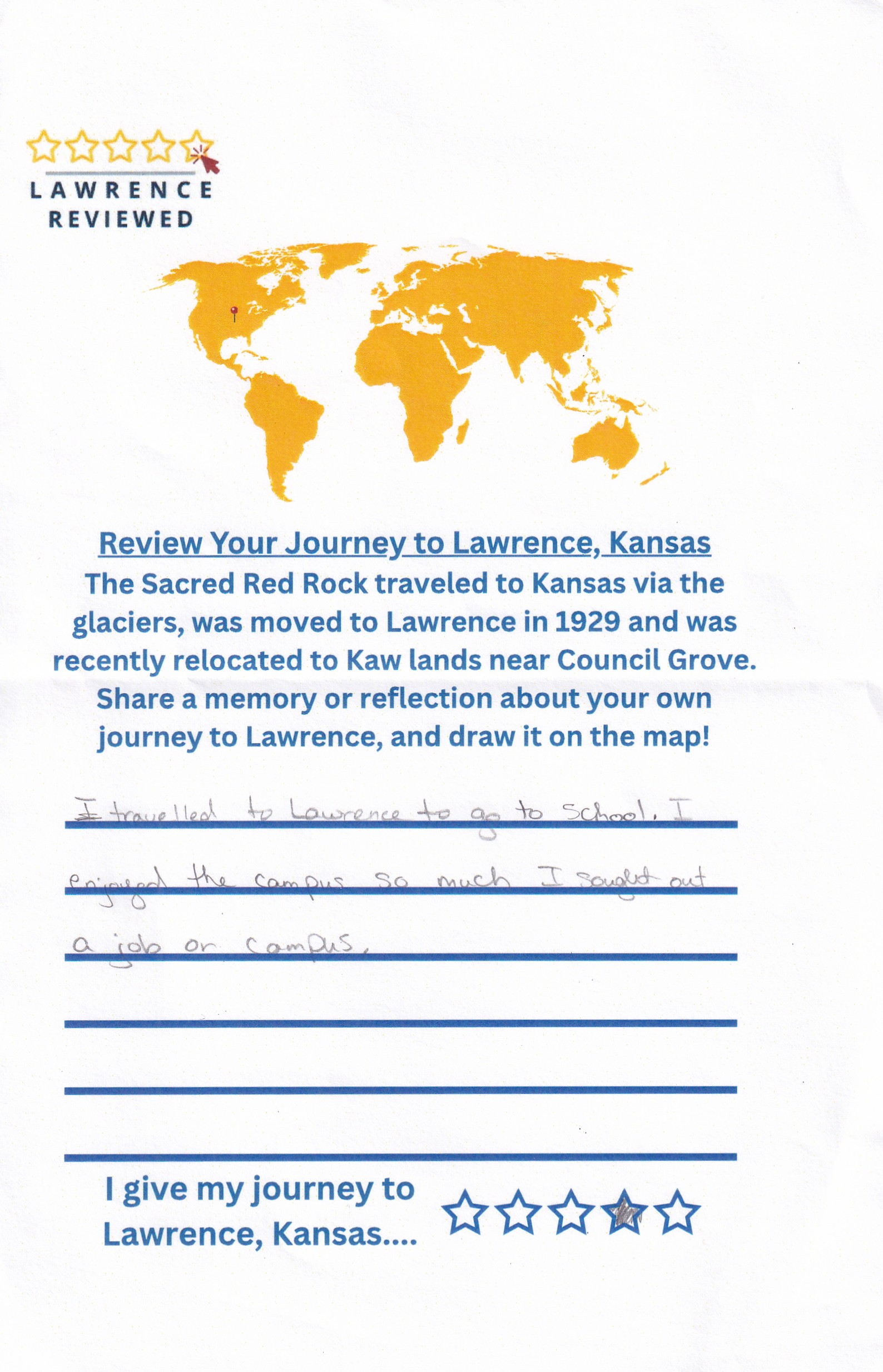
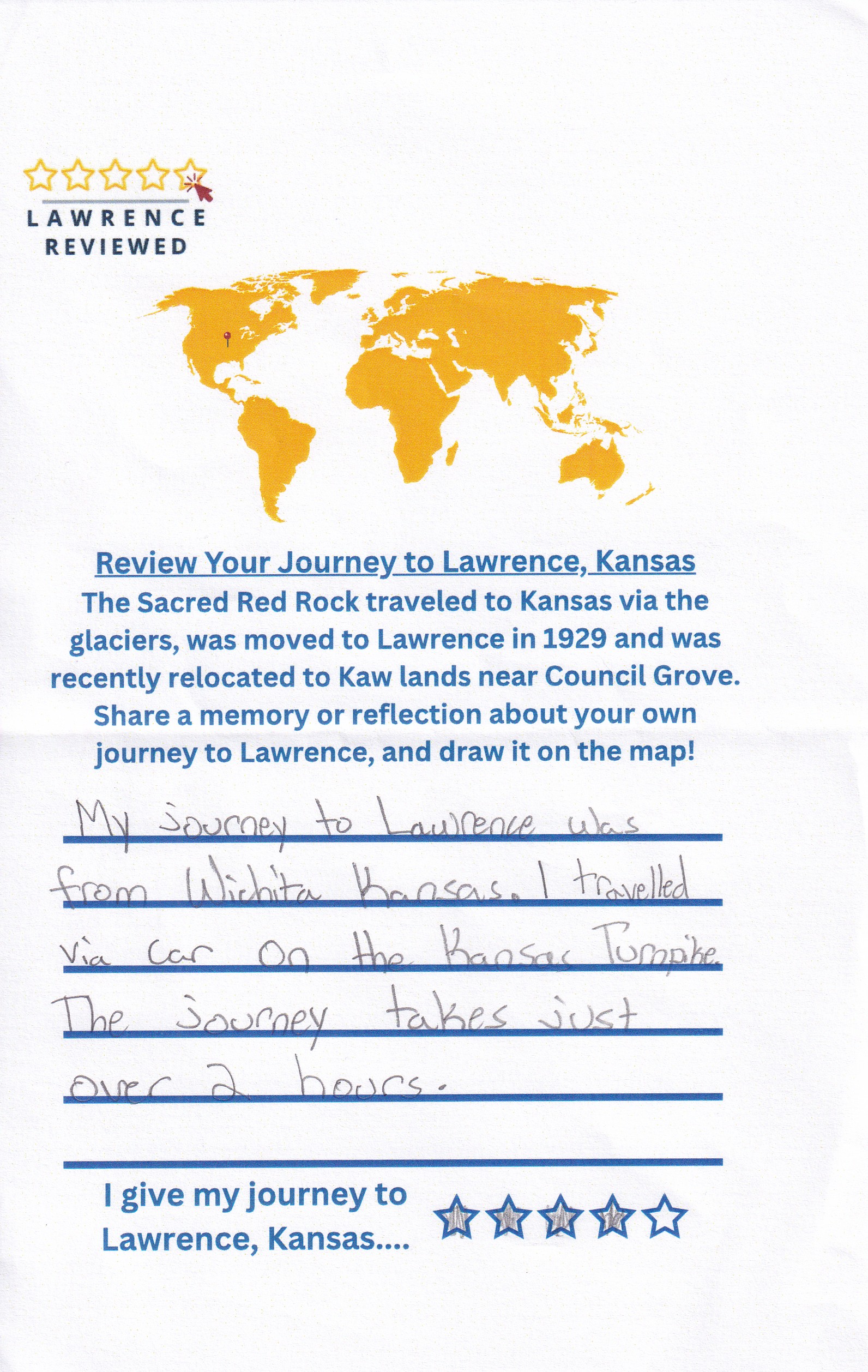
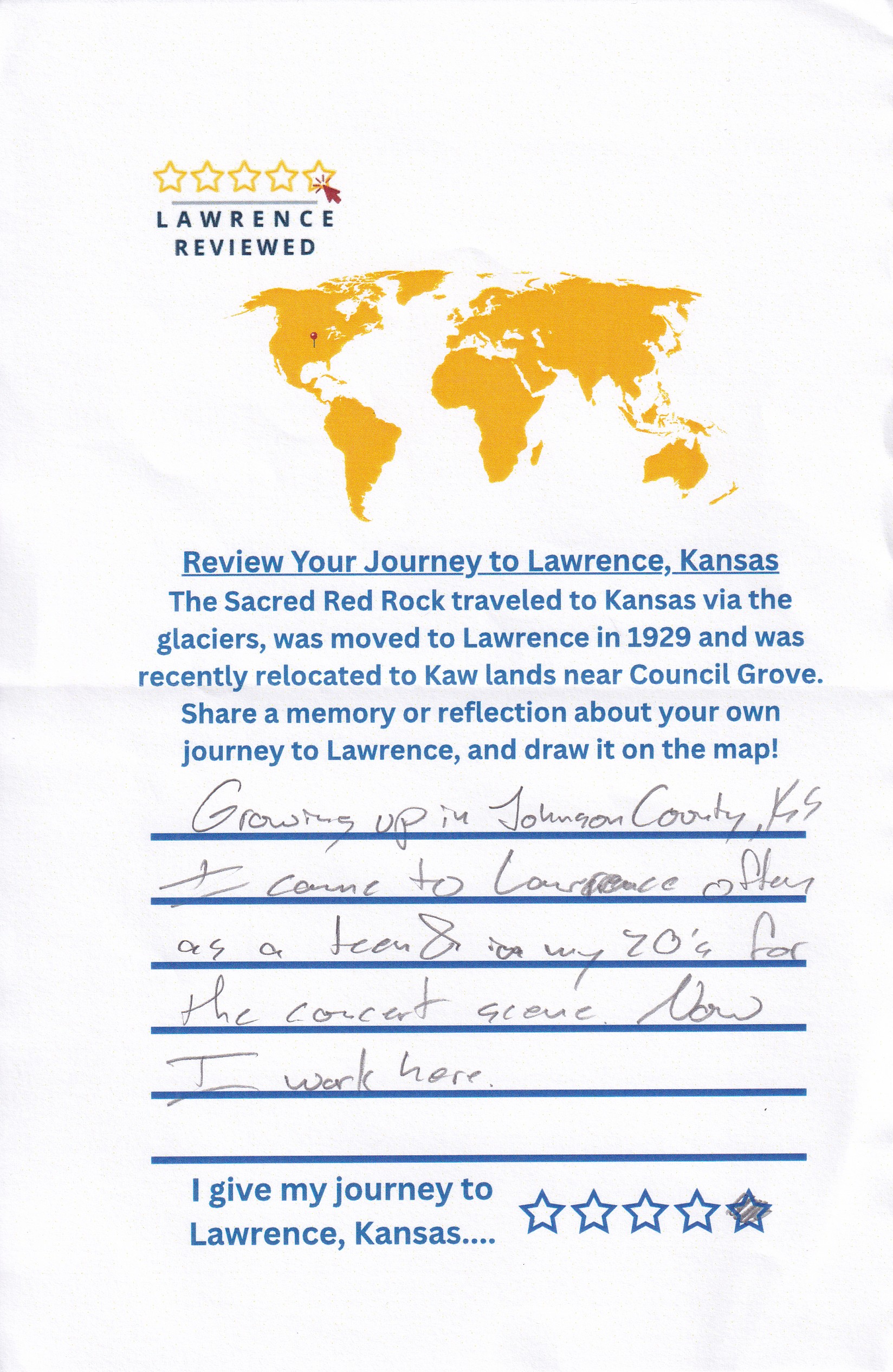
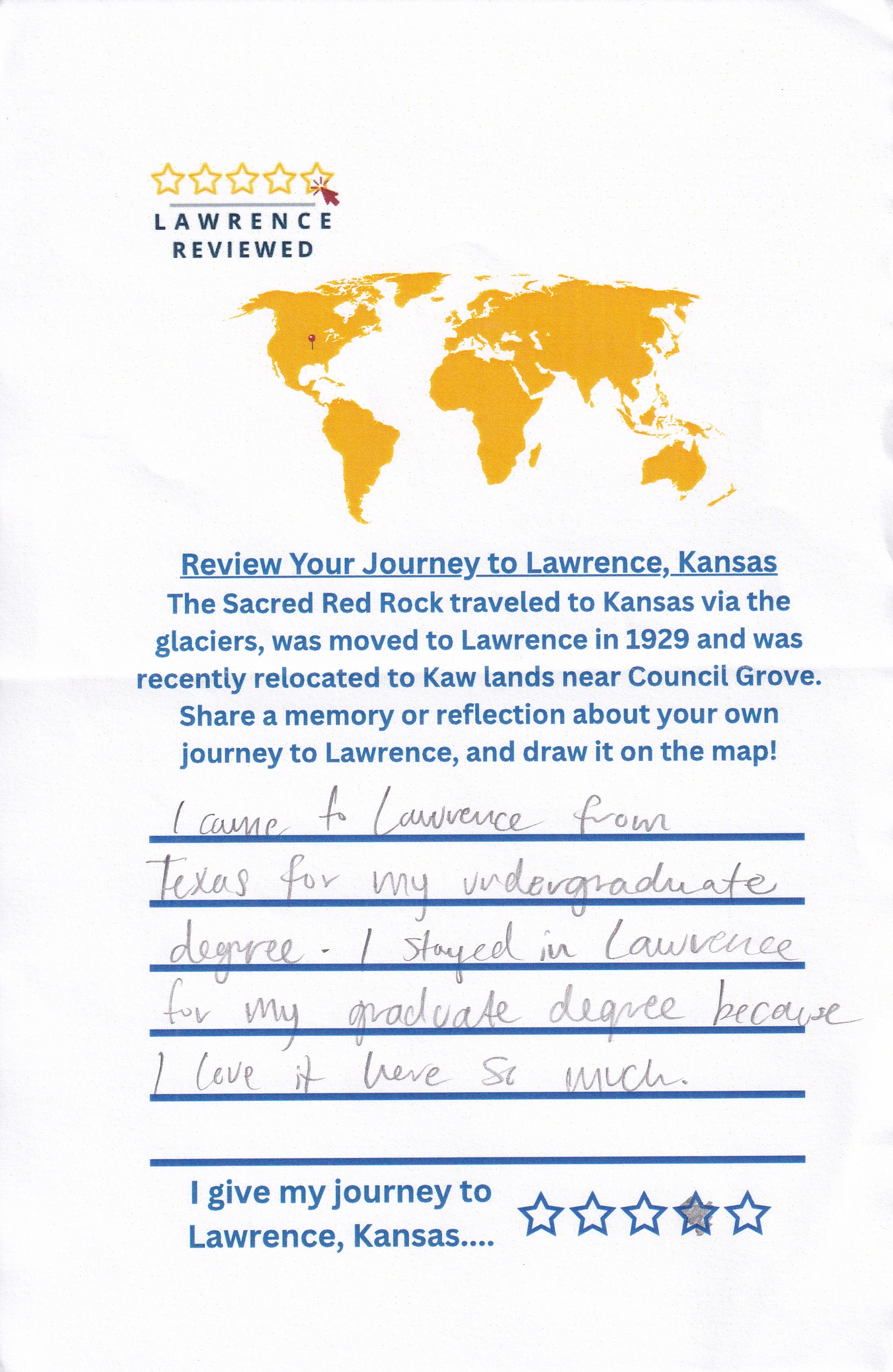
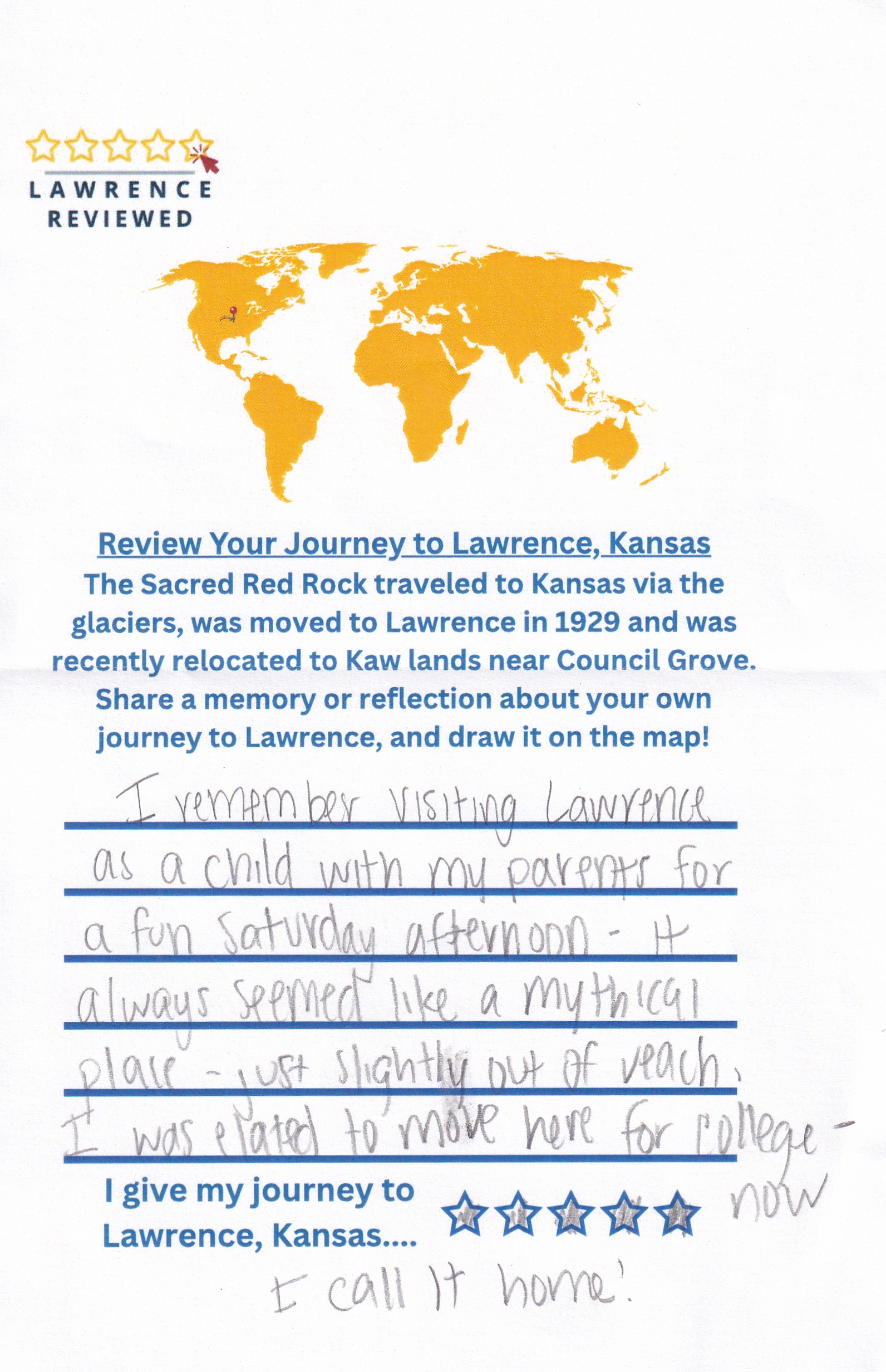
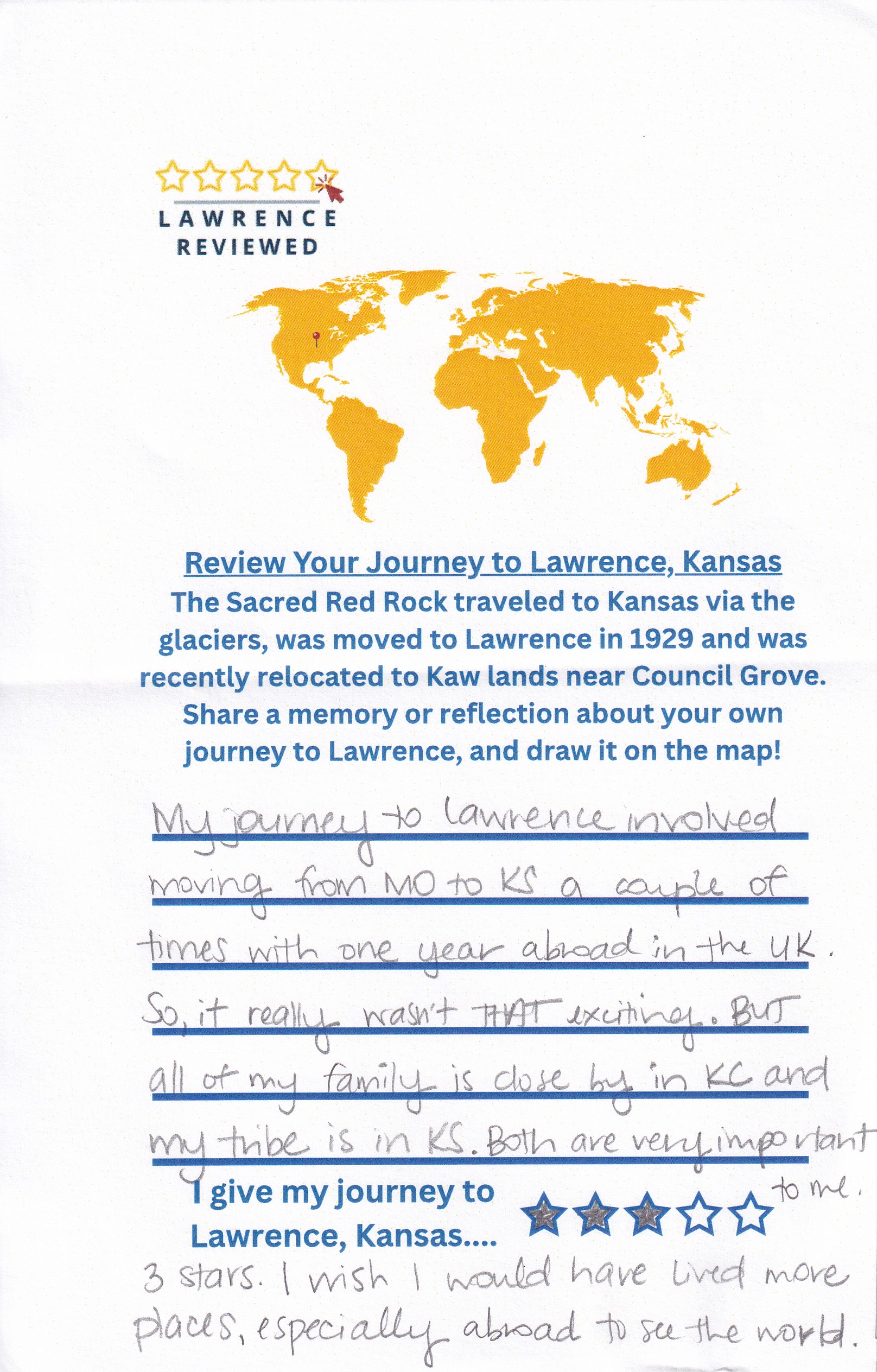
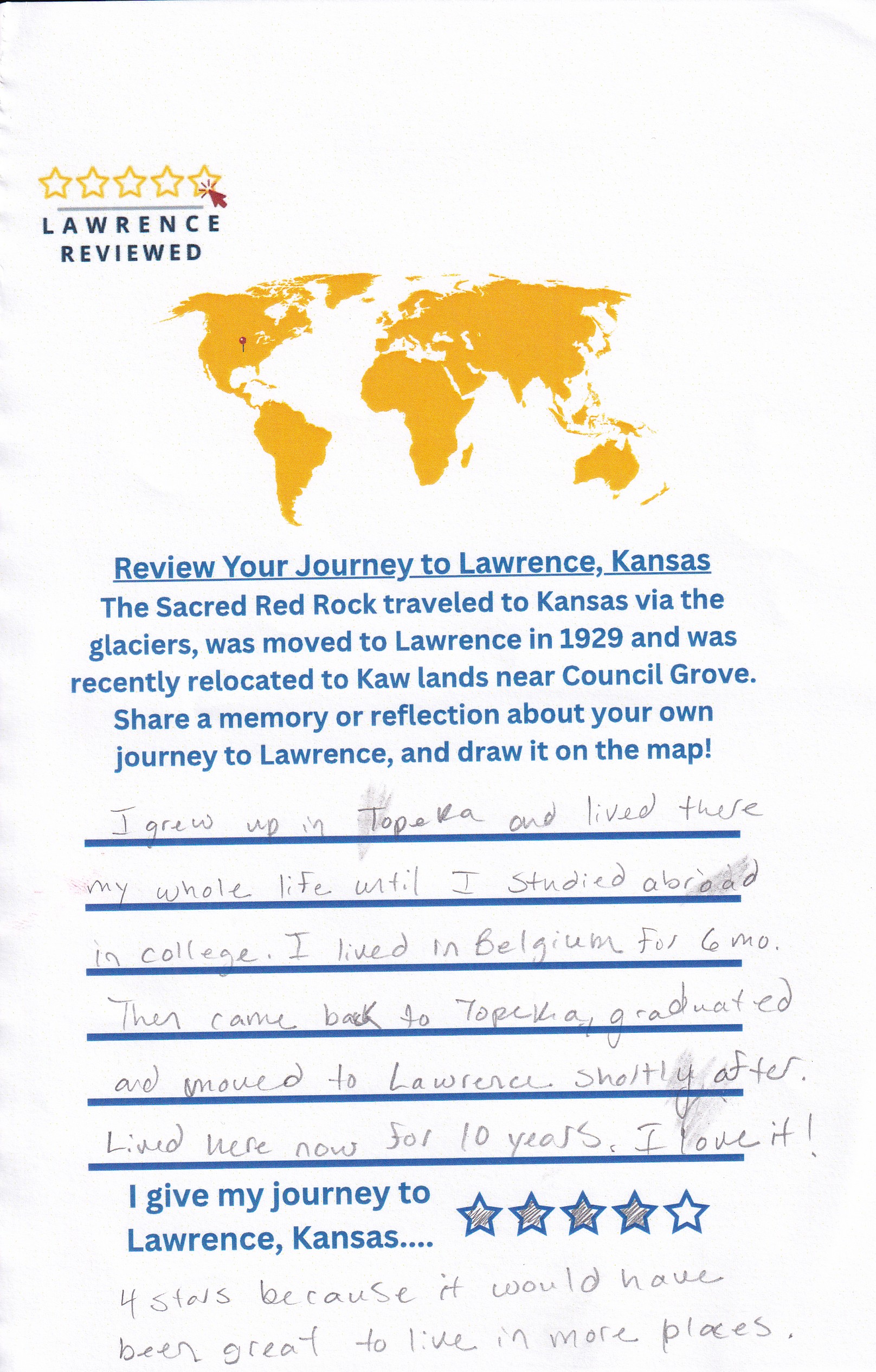
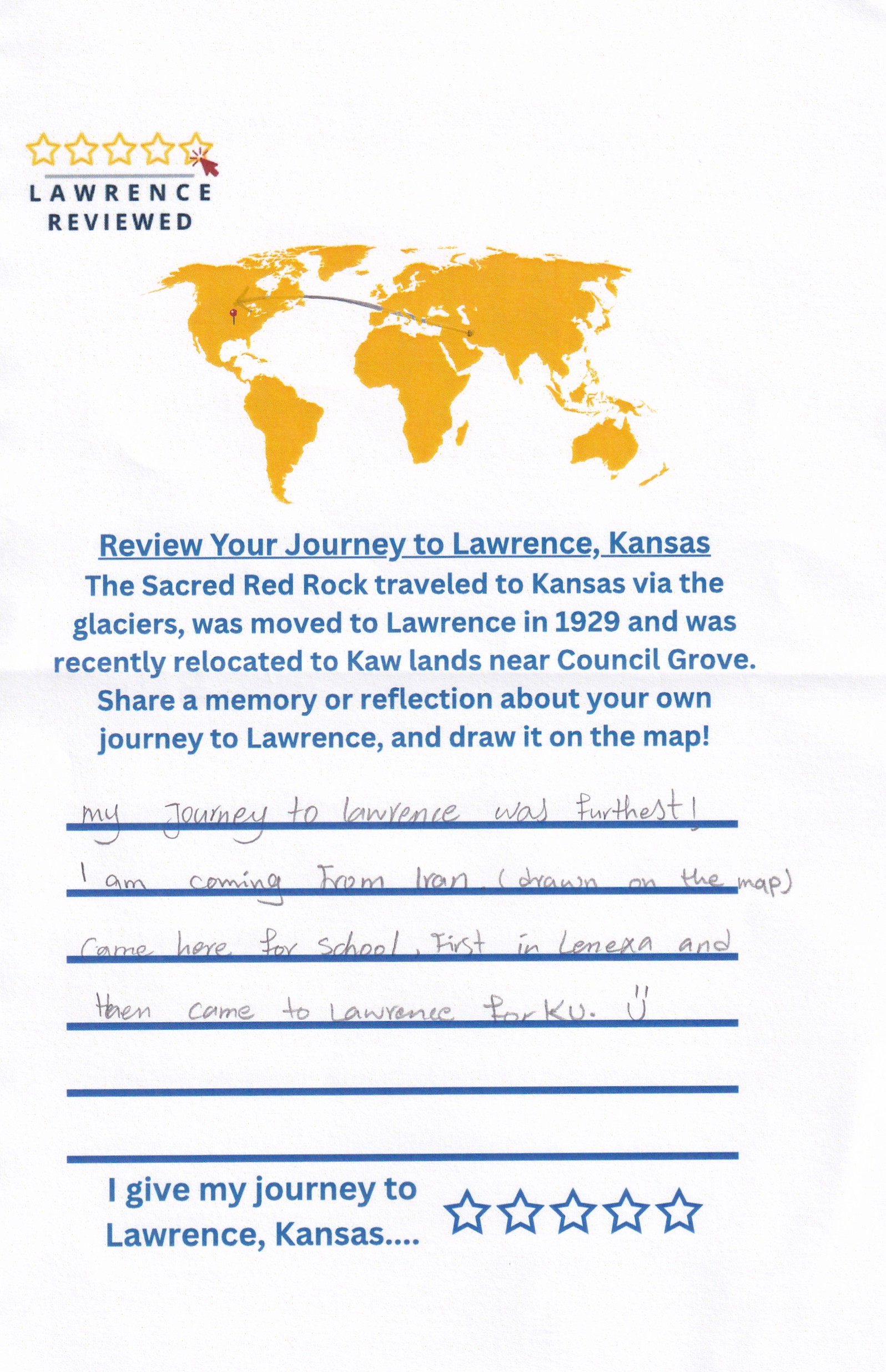
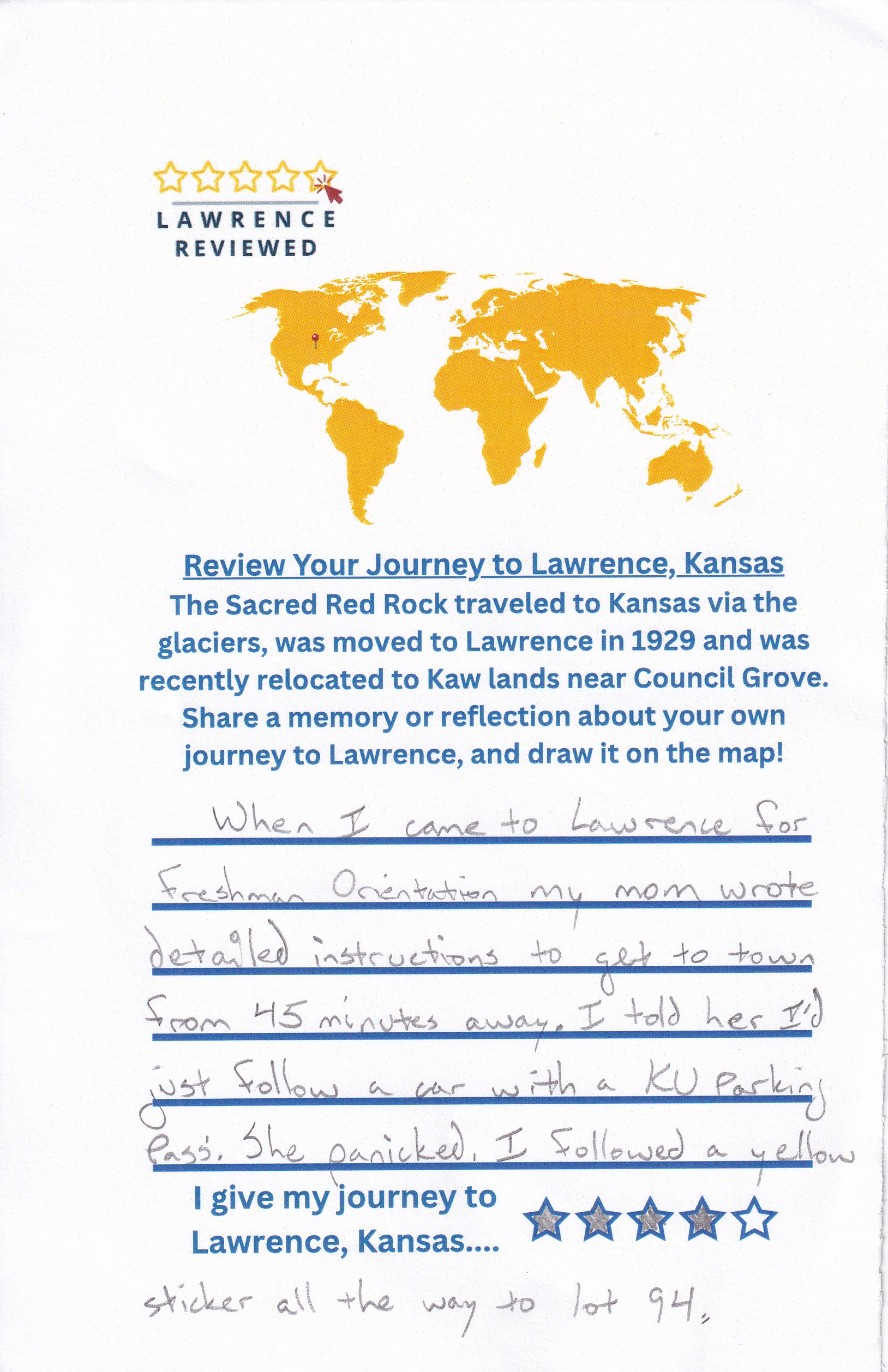
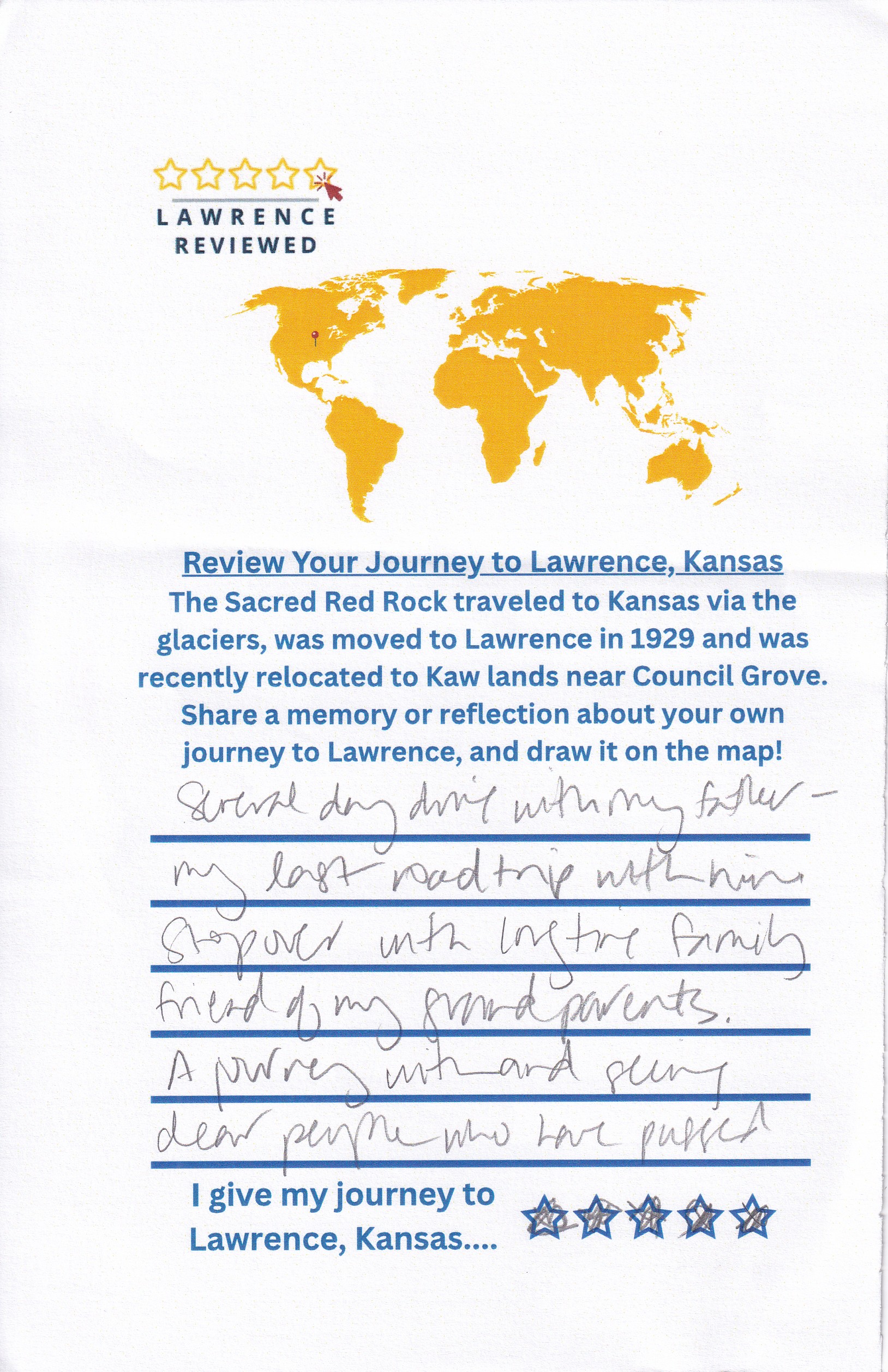
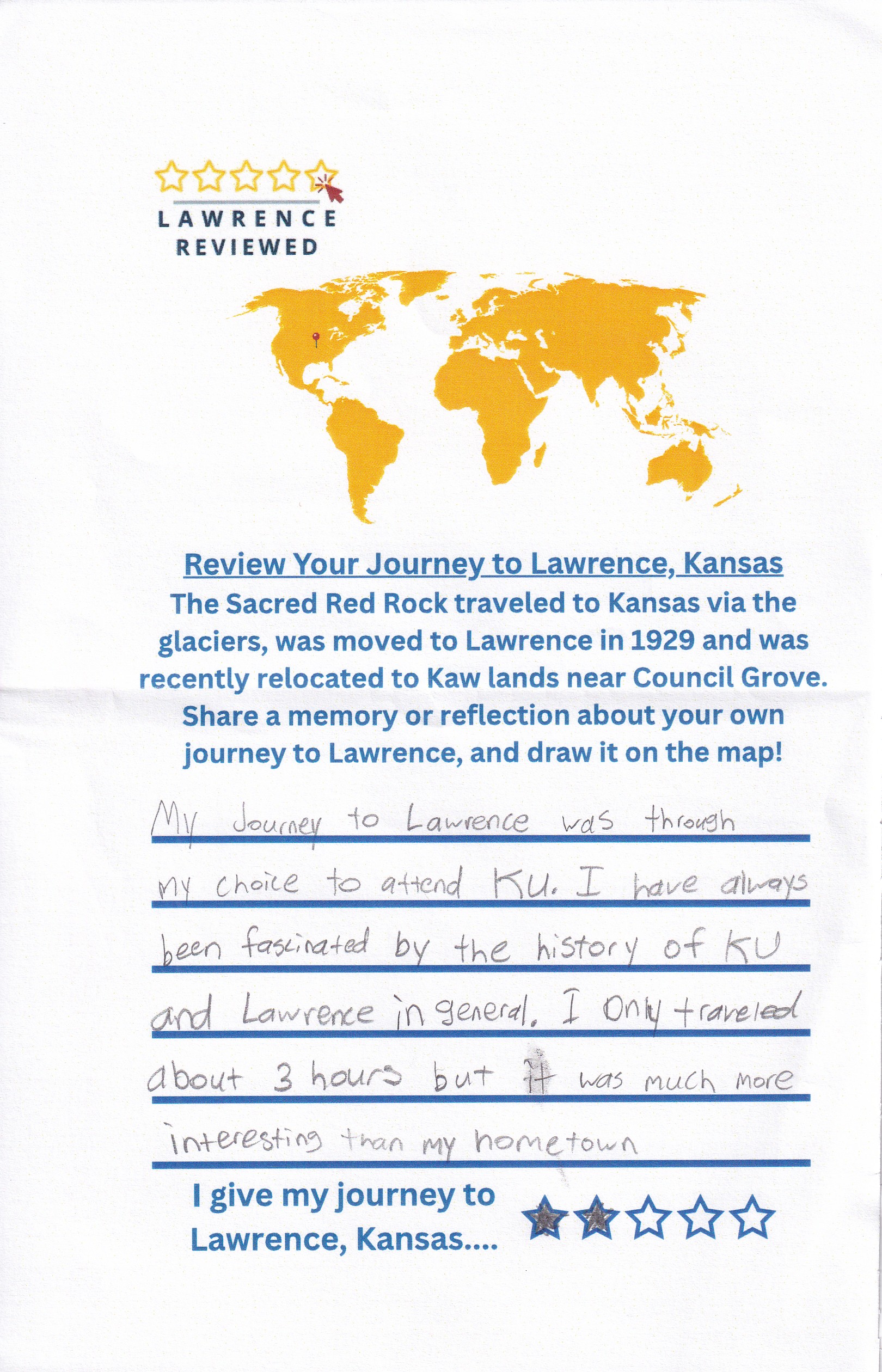
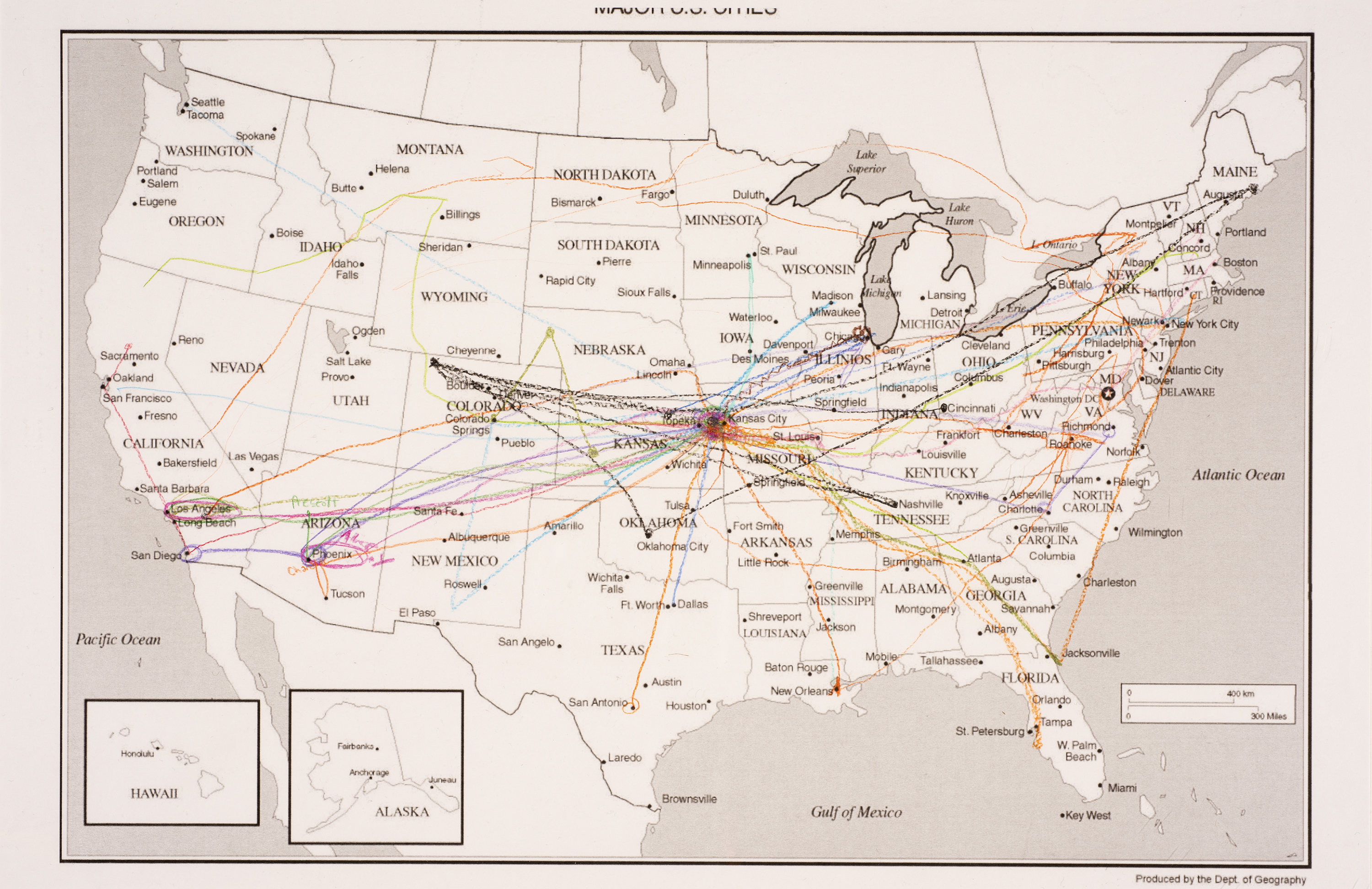
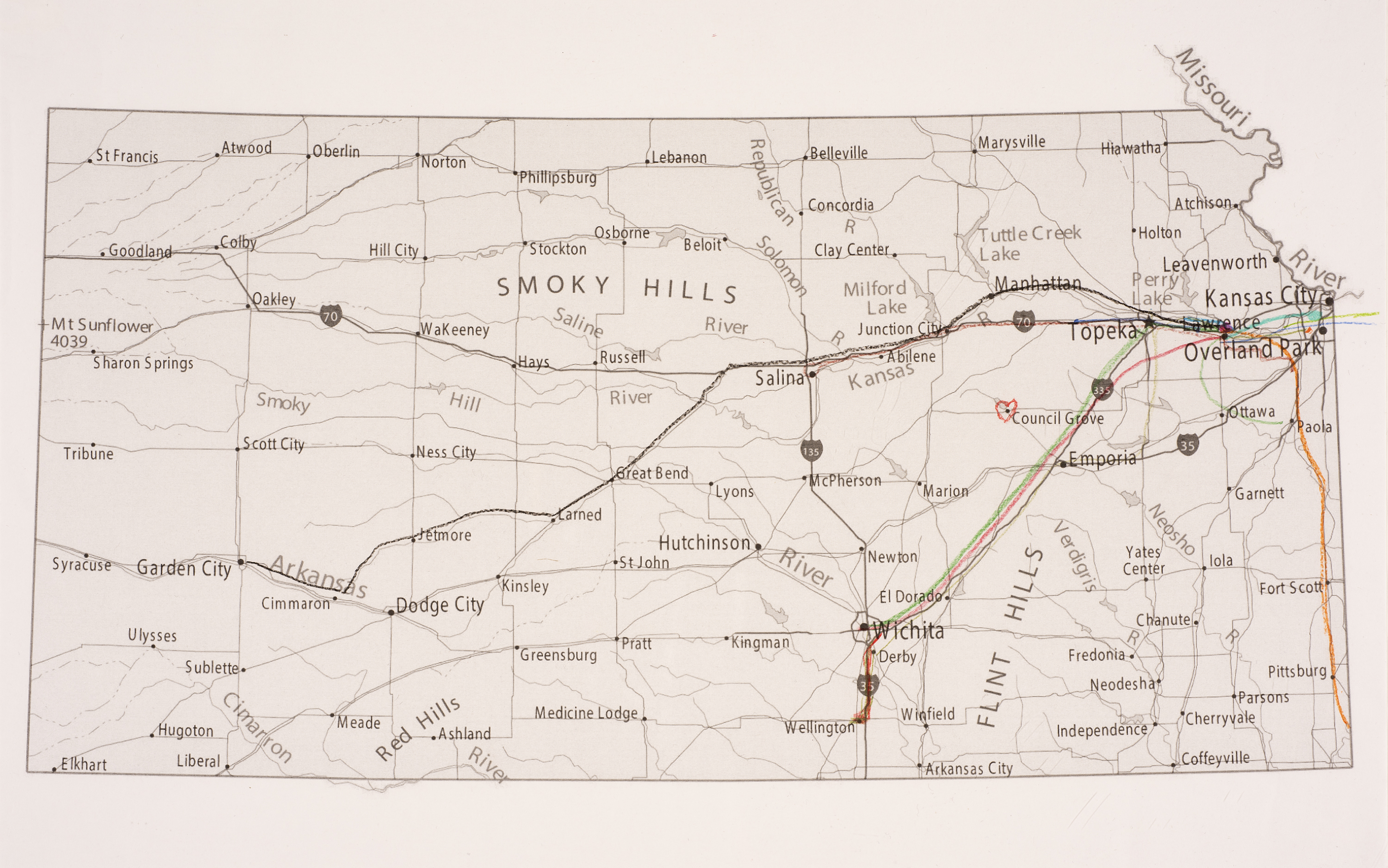
On December 2, 2025, Lawrence Reviewed was invited to host a pop-up event at the Spencer Museum of Art, where we asked visitors to review their journey to Lawrence, Kansas. Explore their responses in the gallery below.
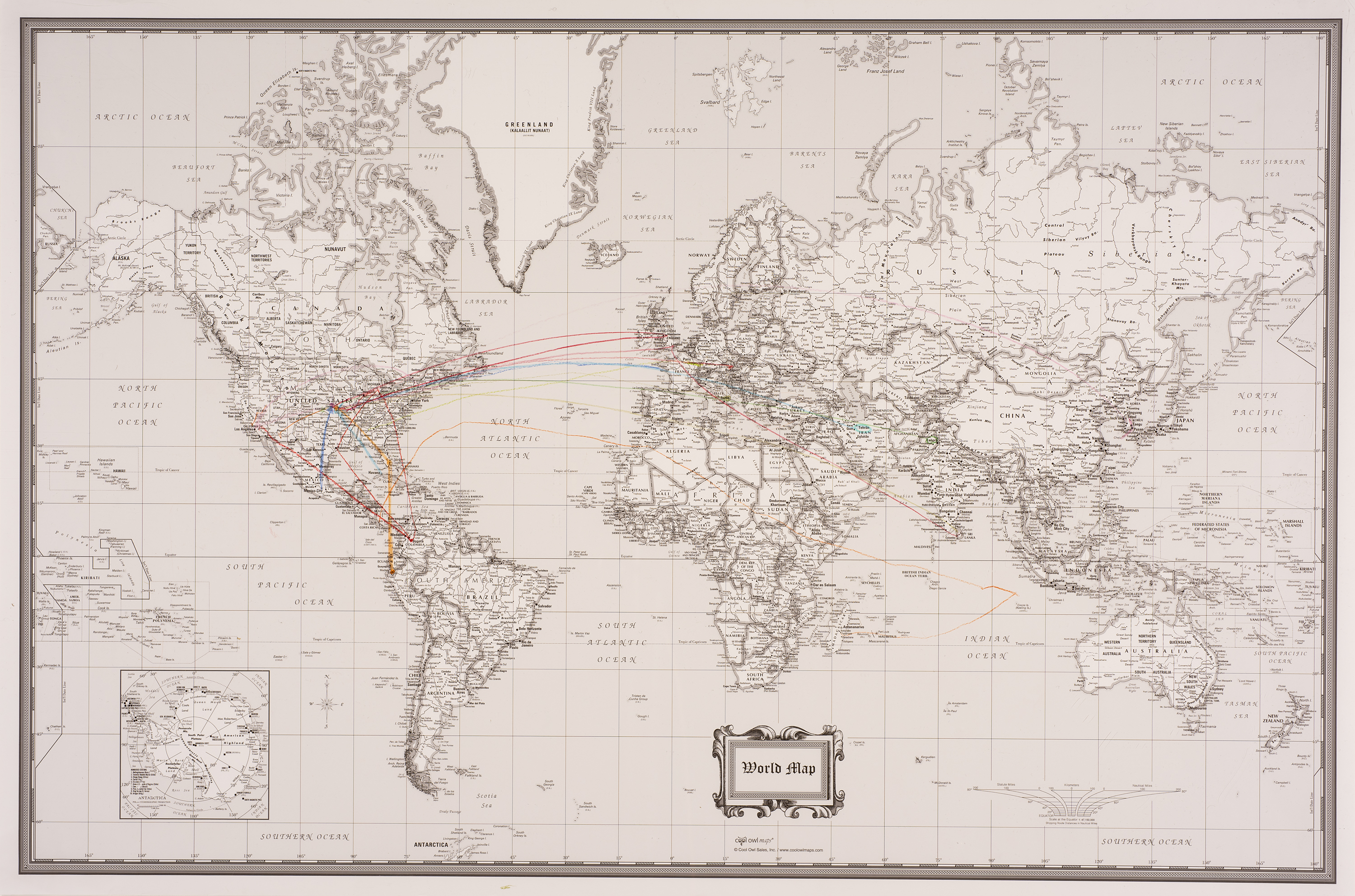
Featured Review by Sydney Pursel
I grew up in Kansas City, on the Missouri side. My tribe, the Ioway, aka. Báxoje, the name we call ourselves which in our language means “the people of the grey snow," is located on the border of Kansas and Nebraska. When I first went to college for undergrad, I chose the University of Missouri due to the in-state tuition, the scholarships I received, and the diversity of degrees. I was interested in both biology and art. KU wasn’t on my radar at that time. During college I started to learn more about the history of America, how treaties were intentionally designed to acquire land from Indigenous people, how Natives were tricked into signing confusing documents that only helped them in the short term, and how tribes were relocated repeatedly and put on reservations where they had to learn to survive in a completely new environment without access to their traditional foods and knowledge of the land. I learned how the Dawes Act of 1887 split up reservation lands amongst individual tribal members creating an “excess” of Native land that was sold to white settlers leaving reservations “checkerboarded” with white and Native ownership which still exists today. I learned about the boarding school system designed to take children away from their families to assimilate them and the Relocation Act of 1956 designed to do the same thing by encouraging Natives to leave their reservation communities and go to work in big cities, further removing them from their people.
Learning this history that I’d never been taught before, led me on a personal identity journey, too. I always knew I was Indian, but I never lived on the reservation. I participated in powwows but realized early on that my light skin and hair didn’t “fit the part,” probably because of my obsession with Disney’s Pocahontas. She was what “real” Native Americans were supposed to look like. I went to events on the reservation but most of the Indians I knew were in my own family. I had finally decided to be an art major and was making a lot of work about Native American stereotypes and how they might be partially to blame for some of the insecurity I felt about my Indian identity, not to mention all of the government interventions I had been learning about that were explicitly designed to erase Native people.
But I still didn’t know that much about my own tribe and our history. So, I read Ioway books and connected to groups of people online that were sharing their knowledge about our history, culture, and language. I started to ask myself what being Báxoje means today and realized that being Ioway for me means being an active citizen and giving back to my community. While I was doing some of this virtually from Columbia, MO, I thought it would be much easier to learn, meet people, and contribute if I lived closer to the reservation. So, I applied to one school and one school only for my master’s in fine arts, the University of Kansas. During my three years in graduate school, I would travel to the reservation often, attending language classes and beading circles and meeting more and more tribal citizens. I became involved with the powwow and created art projects alongside community members.
After graduation, I moved back to Columbia, MO for a bit due to my partner’s job but when the curator for public practice position opened at the Spencer Museum of Art, I applied and found myself right back in Lawrence, KS. Now, I get to collaborate on projects with all kinds of communities including one involving the return of a 28-ton red quartzite boulder to Kaw Nation. Also known as the Kanza, the state of Kansas gets its name from their people. Both Lawrence and my tribe’s current reservation are on Kaw original homelands, so it was extra special for me to be part of this monumental project to return a Rock that had its own identity journey of sorts. In’zhúje’waxóbe, which means the Sacred Red Rock in the Kaw language, holds immense cultural, spiritual, and historical significance to the tribe. The Rock went from being a sacred landmark where Kanza people would gather to pray to a monument to the settlers and back to a sacred landmark visited by Kaw people once again. In some ways, our journey’s mirror one another, both separated from our people to return home once again.
I give my journey to Lawrence, KS 4 Stars. It wasn’t an easy journey, and I’ve made plenty of mistakes along the way, but I’m so glad that it all led me to Lawrence, where I am closer to my tribal community and surrounded by a large Native population thanks to Haskell Indian Nations University. I’m proud to live here and contribute to projects that have positive impacts in Lawrence and beyond.
Sydney Pursel is the Spencer Museum of Art's Curator for Public Practice. In this role, she initiates ways to involve community and incorporate feedback into exhibitions and programs.
I give my journey to Lawrence, Kansas...
Prompt: The Sacred Red Rock traveled to Kansas via the glaciers, was moved to Lawrence in 1929 and was recently relocated to Kaw lands near Council Grove. Share a memory or reflection about your own journey to Lawrence, and draw it on the map!